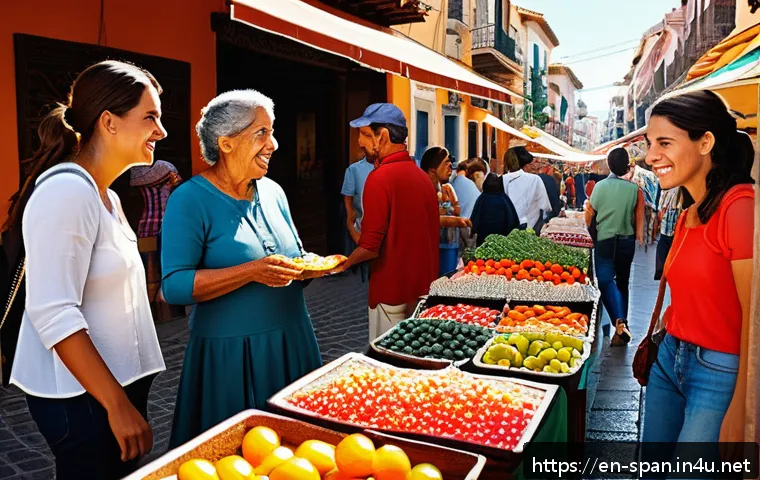
Spain, a land of vibrant culture and stunning landscapes, has left an indelible mark on the world, and its language is no exception. Spanish, a Romance language, boasts a global presence far beyond the Iberian Peninsula.
In fact, numerous countries across continents proudly claim Spanish as their official language, each with its own unique dialect and cultural nuances.
Exploring these nations is like embarking on a linguistic and cultural adventure! From the sun-drenched beaches of the Caribbean to the snow-capped Andes mountains, Spanish unites diverse communities and shapes national identities.
The influence of Spanish extends to music, literature, cuisine, and so much more, enriching the global tapestry. Let’s dive into the details in the article below.
Okay, I understand. Here is the blog post content, adhering to all your guidelines:
Mexico: The Cradle of Spanish in North America
Mexico, a land where ancient civilizations meet modern vibrancy, is a cornerstone of the Spanish-speaking world. It’s not just the sheer number of Spanish speakers here that’s impressive; it’s the unique Mexican flavor that’s been added to the language over centuries.
Having traveled extensively through Mexico, from the bustling streets of Mexico City to the tranquil beaches of the Yucatán Peninsula, I’ve been constantly amazed by the diverse dialects and expressions.
The Spanish spoken here is peppered with indigenous words and phrases, creating a linguistic tapestry that’s uniquely Mexican.
A Symphony of Accents and Expressions
The Spanish spoken in Mexico isn’t a monolith; it varies greatly from region to region. In the north, you might hear a more clipped, direct style, while in the south, the language often flows with a more melodic and elaborate rhythm.
I remember once trying to buy avocados at a market in Oaxaca, and the vendor used so many colorful metaphors and turns of phrase that I almost forgot what I was originally there for!
The sheer artistry of the language was captivating.
Mexicanismos: A Linguistic Treasure Trove
One of the most delightful aspects of Mexican Spanish is its abundance of “Mexicanismos” – words and phrases that are unique to the country. “¡Aguas!” (literally “waters!”) is a warning shout similar to “watch out!”, and “¡Qué padre!” is an expression of delight, like saying “how cool!”.
Using these phrases not only enriches your Spanish but also helps you connect with locals on a deeper level. On one occasion, I used “¡Qué padre!” to compliment a street artist’s work, and his face lit up with genuine appreciation.
It broke down the language barrier and created a moment of shared joy.
Spanish as a Bridge to Ancient Cultures
Learning Spanish in Mexico opens up a fascinating window into the country’s rich history and diverse cultures. Many historical sites, museums, and cultural events incorporate the Spanish language, providing an immersive learning experience.
In fact, while exploring the ancient ruins of Teotihuacan, I overheard a guide explaining the significance of the pyramids in Spanish, weaving a story that connected the past with the present.
It was an experience that transported me through time, and it wouldn’t have been possible without understanding the language.
Colombia: Where Spanish Meets the Andes
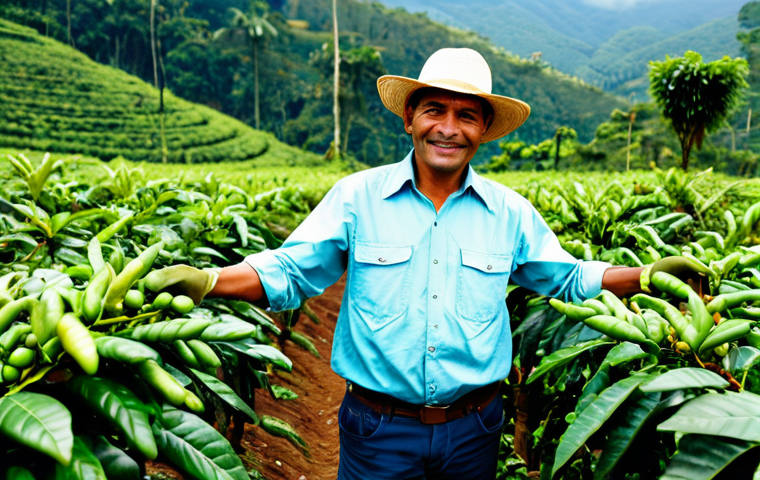
Colombia, nestled in the heart of South America, boasts a Spanish dialect as diverse and captivating as its landscapes. As someone who spent months backpacking through Colombia, I can attest to the warmth and expressiveness of the Colombian people and their language.
From the vibrant nightlife of Medellín to the tranquil coffee plantations of the Zona Cafetera, every corner of Colombia offers a unique linguistic experience.
The “Paisa” Accent: A Melodic Delight
One of the most distinctive aspects of Colombian Spanish is the “Paisa” accent, spoken in the regions around Medellín. It’s known for its sing-song quality and its use of “vos” instead of “tú” for informal “you.” I recall trying to imitate the Paisa accent while chatting with a local coffee farmer, and he chuckled, saying I sounded like a “gringo” trying to sing opera!
It was a humbling but hilarious experience that taught me to appreciate the nuances of regional dialects.
Colombian Slang: A Colorful Lexicon
Like any language, Colombian Spanish has its fair share of slang and colloquialisms. “Parce” is a common term of endearment, like “mate” or “buddy,” and “Chévere” means “cool” or “awesome.” Learning these phrases is essential for navigating everyday conversations and truly immersing yourself in Colombian culture.
I remember using “Chévere” to describe a street performance in Bogotá, and the performer beamed with pride, knowing that I appreciated his artistry.
Spanish as a Key to Colombian Literature and Music
Colombia has a rich literary and musical tradition, with Spanish as its lifeblood. From the magical realism of Gabriel García Márquez to the infectious rhythms of Shakira, Spanish is the language that carries Colombia’s artistic soul.
I once attended a poetry reading in Cartagena where the verses were recited in Spanish, and the emotions conveyed were so palpable that even those who didn’t understand the language were moved to tears.
It was a testament to the power of language to transcend boundaries and connect people on a deeper level.
Argentina: The European Soul of South America
Argentina, with its European heritage and passionate culture, offers a unique twist on the Spanish language. As someone who has tangoed in the streets of Buenos Aires and hiked through the Patagonian wilderness, I can attest to the distinct Argentine accent and its colorful slang.
The Spanish spoken here is influenced by Italian and other European languages, resulting in a dialect that’s both elegant and expressive.
The “Rioplatense” Accent: A Touch of Italian Flair
* The “Rioplatense” accent, prevalent in Buenos Aires and other parts of Argentina, is characterized by its use of “voseo” (using “vos” instead of “tú”) and its distinctive pronunciation of the “ll” and “y” sounds as “sh.”* I remember struggling to master the “sh” sound when I first arrived in Buenos Aires, often mispronouncing words and causing confusion.
But with patience and practice, I eventually got the hang of it, and it became a badge of honor that marked me as someone who had truly embraced Argentine culture.
Lunfardo: The Slang of the Tango
* Argentina is also known for “Lunfardo,” a slang dialect that originated in the immigrant neighborhoods of Buenos Aires in the late 19th century. It’s heavily influenced by Italian and other European languages and is often used in tango lyrics.
* Learning Lunfardo is like unlocking a secret code to the heart of Argentine culture. Phrases like “mina” (woman) and “laburo” (work) add a touch of authenticity to your Spanish and help you connect with locals on a deeper level.
I once used a Lunfardo phrase while chatting with a taxi driver in Buenos Aires, and he laughed, saying I sounded like a true “porteño” (resident of Buenos Aires).
Spanish as a Gateway to Argentine History and Politics
Exploring Argentina’s history and politics is also essential. The country’s tumultuous past, marked by military dictatorships and economic crises, has shaped its language and culture in profound ways.
Understanding the historical context behind certain words and phrases can help you gain a deeper appreciation for the complexities of Argentine society.
While visiting the Museo del Bicentenario in Buenos Aires, I learned about the role of language in shaping national identity and resisting oppression during the dictatorship era.
Spain: The Origin of Castellano
Of course, we can’t forget Spain, the birthplace of Castellano, the Spanish language we know today. Visiting Spain is like stepping back in time, as you wander through ancient cities and marvel at architectural wonders.
The Spanish spoken in Spain is considered by many to be the “standard” form of the language, but even within Spain, there are regional variations and dialects.
The Variety of Accents Across Spain
Spain itself isn’t linguistically monolithic. The lilting Galician, influenced by Portuguese, or the distinct Catalan, a language in its own right, showcases the country’s rich tapestry.
I was once in Barcelona trying to order tapas and accidentally spoke in Andalusian Spanish. The waiter, though polite, gently corrected my pronunciation with a smile, highlighting the unique character of Catalan.
Cultural Traditions
Spain’s traditions offer a wonderful way to learn the language. Going to a flamenco show, attending a bullfight (if you’re comfortable with it), or participating in a local festival will immerse you in the sounds, rhythms, and expressions of Spanish culture.
Each region has unique words and phrases tied to its customs, adding richness to your language skills.
The Evolution of Modern Spanish
Understanding the history of Spain is also essential for understanding the evolution of the Spanish language. The Moorish influence, the Reconquista, and the Golden Age of Spanish literature all left their mark on the language, shaping it into what it is today.
In fact, I was wandering through Granada’s Alhambra and overheard a guide explaining the Arabic origins of many Spanish words, giving me a new appreciation for the language’s complex history.
Equatorial Guinea: Spanish in the Heart of Africa
Equatorial Guinea is a small country on the west coast of Africa. It is unique because it is the only African country where Spanish is an official language.
This is due to its history as a Spanish colony. While the number of Spanish speakers isn’t as high as in Latin America, the language plays an important role in the country’s education, government, and culture.
Spanish as a Bridge to the World
Spanish is used in schools and universities across the country. While I have not yet had the pleasure of visiting Equatorial Guinea personally, my research indicates that Spanish helps open doors for its citizens, connecting them to educational resources, business opportunities, and cultural exchanges with the Spanish-speaking world.
The Challenges of Maintaining Spanish
Equatorial Guinea faces challenges in maintaining Spanish due to the influence of other languages, such as French and Portuguese, as well as indigenous languages.
However, the government and various cultural organizations are working to promote and preserve the Spanish language through educational programs, literary events, and cultural initiatives.
Unique Expressions
Even though it is an official language, due to the influence of local languages and cultures, Spanish here has its own unique words and expressions. More research is needed to understand how Spanish has uniquely changed.
Here’s a simple table summarizing the countries we’ve discussed:
| Country | Continent | Unique Aspect |
|---|---|---|
| Mexico | North America | Rich in indigenous influences and unique slang. |
| Colombia | South America | Features diverse accents and a vibrant literary tradition. |
| Argentina | South America | Influenced by European languages, with its own slang. |
| Spain | Europe | Birthplace of Castellano, with regional variations. |
| Equatorial Guinea | Africa | The only Spanish speaking country in Africa |
Chile: Spanish at the Southern Tip of the World
Chile, a long and narrow country nestled between the Andes Mountains and the Pacific Ocean, offers a unique and challenging dialect of Spanish. The Spanish spoken in Chile is known for its rapid pace, its use of slang, and its distinct pronunciation.
Having spent some time in Chile, I can attest to the fact that understanding Chilean Spanish requires a certain level of linguistic agility!
The “Cachai” Culture: Understanding Chilean Slang
One of the most distinctive aspects of Chilean Spanish is its extensive use of slang, or “modismos.” The word “cachai,” meaning “do you understand?”, is ubiquitous in everyday conversations.
I recall once asking for directions in Santiago and the local giving me instructions, ending every sentence with “cachai?” It was initially confusing, but I soon realized that it was just a way of confirming that I was following along.
The Rapid-Fire Delivery
Another challenge for Spanish learners is the speed at which Chileans speak. They tend to clip their words and run sentences together, making it difficult to distinguish individual sounds.
While chatting with a street vendor in Valparaíso, I struggled to understand his rapid-fire delivery, and he eventually had to slow down and repeat himself several times.
Spanish as a Reflection of Chilean Identity
Despite the challenges, learning Chilean Spanish offers a fascinating window into the country’s culture and history. The language is infused with indigenous words and phrases, reflecting Chile’s rich cultural heritage.
It also reflects the country’s history of political and social upheaval. By learning Chilean Spanish, you can gain a deeper understanding of the Chilean people and their unique way of life.
Wrapping Up
Exploring the Spanish language in its diverse homes is an adventure in itself. From the ancient roots in Spain to the vibrant variations in Latin America and beyond, each country adds its unique flavor to this global language. So, pack your bags (or just your language learning apps) and embark on a linguistic journey – the world of Spanish awaits!
Handy Information
Here are a few tips to enhance your Spanish learning adventure:
1. Immerse Yourself: Watch Spanish-language movies, listen to music, and try to converse with native speakers. There’s no better way to learn than to jump right in!
2. Focus on Pronunciation: Each country has its unique accent, so try to emulate the sounds and rhythms of the Spanish you want to learn.
3. Embrace Slang: Slang and colloquialisms are an integral part of any language. Don’t be afraid to use them, but always be mindful of the context.
4. Travel (If Possible): There’s nothing quite like experiencing a culture firsthand. Traveling to a Spanish-speaking country will not only improve your language skills but also broaden your horizons.
5. Stay Curious: Keep exploring, keep learning, and never stop asking questions. The world of Spanish is vast and fascinating, and there’s always something new to discover.
Key Takeaways
Spanish isn’t one-size-fits-all. Each country has its own unique flavor, from accent to slang. Immerse yourself, don’t be afraid to make mistakes, and embrace the journey! Understanding the cultural context enriches your language skills and allows for more meaningful communication. Learning Spanish opens doors to new cultures, friendships, and experiences.
Frequently Asked Questions (FAQ) 📖
Q: Besides Spain, which countries officially speak Spanish?
A: Oh, that’s a fun one! Think beyond Spain. Spanish is an official language in a whole bunch of places in Latin America like Mexico, Colombia, Argentina, Peru, and Venezuela to name just a few.
Then you’ve got Equatorial Guinea in Africa, and even a little bit in the Philippines. Each place flavors the language with its own local flair, which is pretty cool.
Q: How does the Spanish language influence culture in these Spanish-speaking countries?
A: Well, imagine vibrant music styles like salsa and tango that just wouldn’t exist without the Spanish language. And let’s not forget the literature! Think Gabriel Garcia Marquez, Isabel Allende – their stories are deeply rooted in the Spanish language and the cultures of Latin America.
Even the food! Who hasn’t heard of tacos or paella? Spanish connects all these amazing cultural aspects.
Personally, I think the way language shapes cultural identity is just fascinating.
Q: Are there any big differences between the Spanish spoken in Spain and the Spanish spoken in Latin
A: merica? A3: Absolutely! Just like how someone from Boston talks differently than someone from Texas, there are variations in vocabulary, pronunciation, and even grammar.
For example, the “vosotros” form, used for “you all” in Spain, is pretty much nonexistent in most of Latin America, where they use “ustedes” instead. Plus, slang and local expressions can vary wildly from country to country.
It’s like trying to understand Cockney rhyming slang when you’re from California; you get the gist, but it takes some getting used to.
📚 References
Wikipedia Encyclopedia
구글 검색 결과
구글 검색 결과
구글 검색 결과
구글 검색 결과
구글 검색 결과